Description
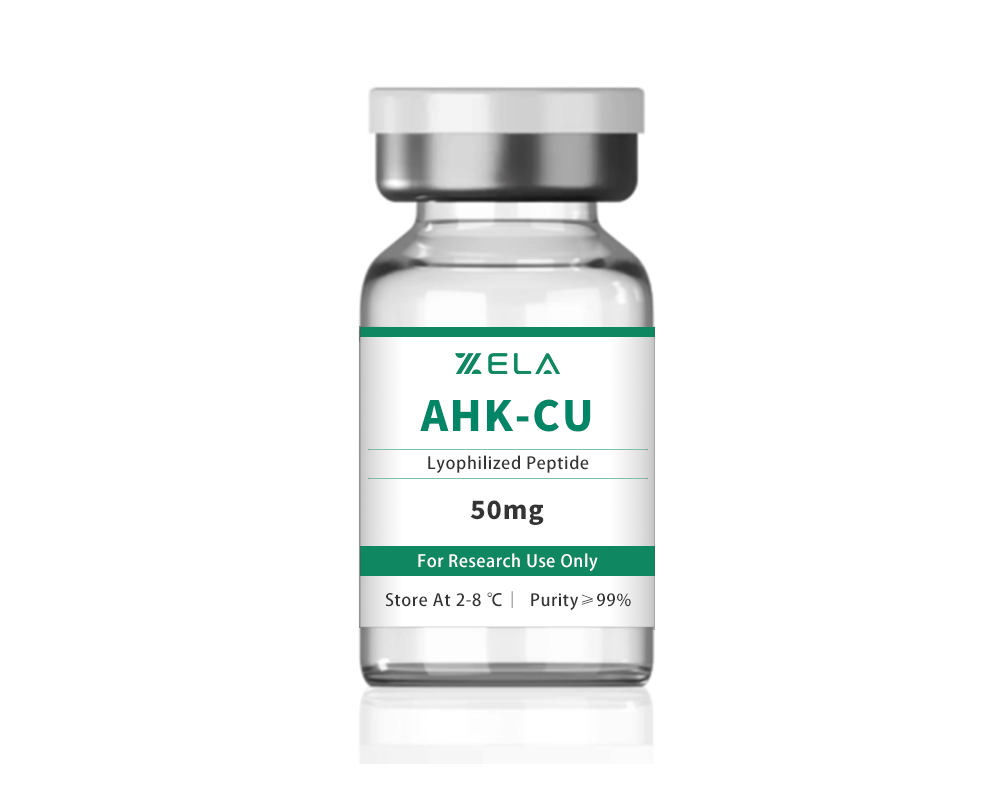
AHK-Cu, also known as Copper Tripeptide-3, is a synthetic, copper-binding tripeptide. It is a complex formed by three amino acids (L-alanine, L-histidine, and L-lysine) bound to a copper (II) ion
It is a structural analog of the well-known peptide GHK-Cu, with the key difference being a single amino acid substitution (glycine replaced by alanine).
Biological Activity & Mechanism
AHK-Cu is a biologically active peptide with a specific focus on promoting hair growth and skin regeneration. Its primary mechanism involves acting as a delivery vehicle for copper ions, which are essential for various biological processes.
Its key activities include:
-
Hair Growth Stimulation: It targets dermal papilla cells (DPCs) in hair follicles. It stimulates these cells to produce VEGF (Vascular Endothelial Growth Factor) and KGF (Keratinocyte Growth Factor), which promote angiogenesis (blood vessel formation) and hair matrix cell proliferation. Research suggests AHK-Cu may be more potent than GHK-Cu specifically for hair growth.
-
Cellular Proliferation & Anti-Apoptosis: It stimulates the proliferation of dermal fibroblasts and increases cell viability. It also reduces the number of apoptotic (dying) cells in dermal papilla cells.
- Extracellular Matrix (ECM) Remodeling: It increases the deposition of collagen to renew the extracellular matrix, which is crucial for skin structure and health.
- Copper Delivery: It delivers bioavailable copper to cells, which acts as a cofactor for enzymes like lysyl oxidase (for collagen cross-linking), tyrosinase (for pigmentation), and superoxide dismutase (an antioxidant).
Applications
Due to its targeted effects, AHK-Cu is primarily used as a cosmetic ingredient in advanced skin and hair care formulations.
Its specific applications include:
-
Hair Restoration: Used in non-hormonal hair loss treatments to stimulate hair growth.
-
Anti-Aging Skincare: Promotes collagen production and skin repair, aiding in anti-aging formulations.
-
Wound Healing & Tissue Repair: Its regenerative properties make it useful for localized tissue repair and post-procedure recovery.
AHK-Cu is typically applied topically to the scalp and skin. It is important to note that it is a research-grade compound for laboratory use and is not intended for human or animal ingestion or injection.

 BRL R$


Reviews
There are no reviews yet.