Description
How This Works
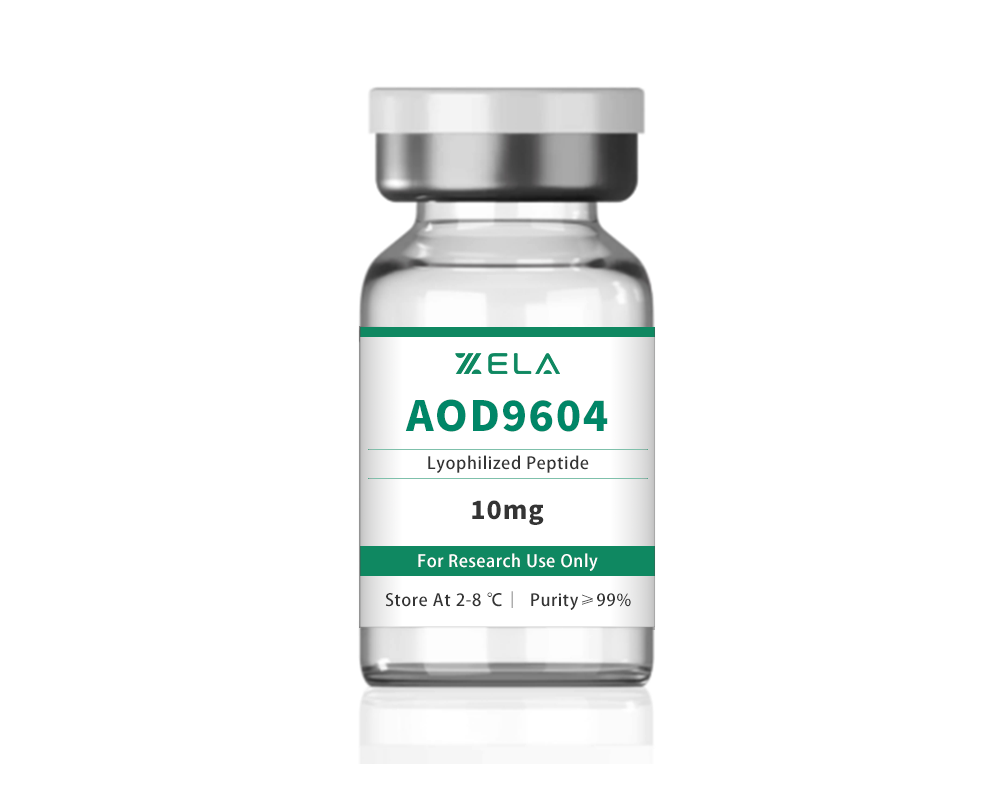
AOD‑9604 is a modified C‑terminal fragment of human growth hormone that retains the lipolytic (fat‑reducing) domain without the growth‑promoting effects[1]. It binds to adipose tissue and triggers breakdown of stored fat while blocking new fat storage (re‑esterification) in adipocytes[4]. At the molecular level, chronic AOD‑9604 administration upregulates β3‑adrenergic receptors in fat tissue, reversing obesity‑related suppression of these fat‑burning receptors[9]. Unlike full‑length hGH, AOD‑9604 does not meaningfully elevate IGF‑1 levels or worsen glucose tolerance, making its tolerability indistinguishable from placebo in human trials[2][3].
Potential Benefits & Side Effects
Observations from preclinical and clinical literature.
- Supports reductions in fat mass and increases in fat oxidation over time; clinical trials showed modest but statistically significant weight loss (approximately 2.6 kg vs. 0.8 kg placebo over 12 weeks at 1 mg/day)[10].
- Preferential loss of abdominal fat observed, resembling the pattern seen with low‑dose hGH therapy[10].
- Does not meaningfully raise IGF‑1 and shows a placebo‑like safety profile in human studies; no anti‑AOD9604 antibodies detected[2][3].
- Emerging regenerative potential: preclinical studies suggest possible cartilage repair and bone health benefits[11][12].
- Generally well tolerated; occasional mild injection‑site reactions (redness/itch) may occur with subcutaneous administration.
Lifestyle Factors
Complementary strategies for best outcomes.
- Pair with a hypocaloric, protein‑forward diet tailored to energy needs; AOD‑9604 is best viewed as a supportive aid to fat loss rather than a stand‑alone solution[10].
- Combine resistance training and aerobic activity to reinforce metabolic adaptations.
- Prioritize sleep and stress management to support adherence and recovery.

 BRL R$


Reviews
There are no reviews yet.