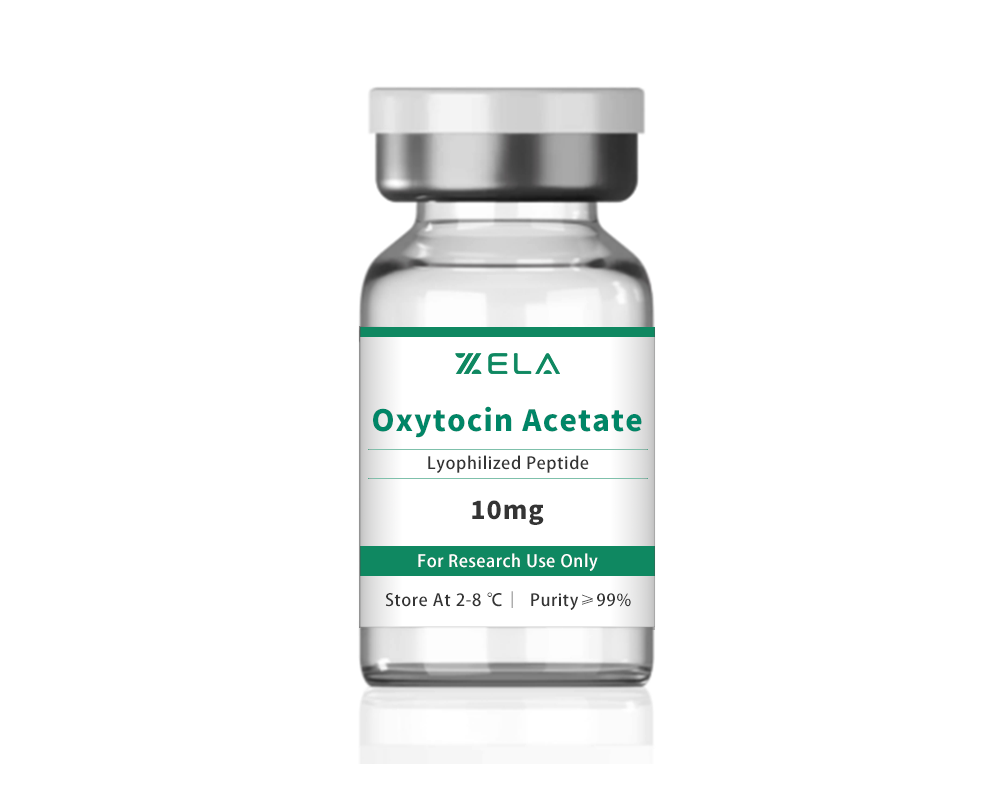
Description
How This Works
Oxytocin exerts its effects by binding to oxytocin receptors (OXTR), which are G‑protein coupled receptors widely expressed in both central and peripheral tissues[6]. In the brain, oxytocin acts as a neuromodulator: it is produced in the hypothalamus and released from the posterior pituitary, and also directly released within brain regions involved in emotion and social behavior. Activation of central OXTR influences neurotransmitter systems (e.g., enhancing prosocial signaling via dopamine and reducing stress responses via the hypothalamic–pituitary–adrenal axis)[7]. These actions underlie oxytocin’s observed effects on increasing trust, empathy, and social bonding.
Peripherally, oxytocin causes contraction of smooth muscles—for example, uterine muscle contraction during labor and milk ejection in lactation[1]. It also can modulate pain perception and inflammation; studies show subcutaneous oxytocin produces local analgesia, likely by acting on sensory nerves or immune cells in skin tissue[8]. Importantly, oxytocin does not significantly cross the blood–brain barrier from the bloodstream. Thus, peripheral administration primarily targets peripheral OXTR (with some indirect central effects), while intranasal administration is thought to better engage central receptors by bypassing the blood–brain barrier. Overall, oxytocin’s mechanism in research contexts involves enhancing social‑affiliative behaviors and modulating physiological stress and metabolic processes through its receptor‑mediated signaling pathways.
Potential Benefits & Side Effects
Research on oxytocin has uncovered a range of potential benefits:
- Social and Behavioral Effects: Oxytocin is associated with increased trust, social bonding, and reduced anxiety in social situations[2]. Clinical research is investigating oxytocin as a therapy for conditions like autism spectrum disorder and social anxiety, due to its prosocial effects. Early studies show intranasal oxytocin can modestly improve social cognition or reduce anxiety in some populations, with a good safety profile.
- Psychiatric and Neurological: Beyond autism and anxiety, oxytocin is being explored in conditions such as PTSD, depression, and addiction. Its role in reducing the stress response and fear (via effects on the amygdala and other limbic structures) makes it a candidate for adjunctive treatment in these disorders. While results are mixed, oxytocin generally has shown anxiolytic (anxiety‑reducing) and mood‑modulating properties in short‑term studies without significant side effects[9].
- Metabolic and Weight Management: Oxytocin may influence appetite and metabolism. In humans, a single intranasal oxytocin dose has been shown to reduce caloric intake at a test meal and increase fat oxidation[10]. Animal studies and small trials suggest chronic oxytocin treatment can lead to modest weight loss, improved insulin sensitivity, and reduced visceral fat[5][11], possibly by acting on hypothalamic circuits that regulate hunger and energy expenditure.
- Analgesic and Anti‑inflammatory: Emerging evidence indicates oxytocin can have pain‑reducing benefits. A randomized trial in healthy adults found that a subcutaneous injection of oxytocin (4 mcg) significantly reduced ratings of heat pain intensity and unpleasantness on the treated arm[8]. Oxytocin receptors in the skin and other tissues may mediate analgesia and wound‑healing processes, suggesting a potential role in pain management and recovery.
- Reproductive Health: As an established uterotonic, oxytocin (administered in much larger doses than research use) is routinely used to induce labor or reduce postpartum bleeding. In a research context, this effect is a reminder of oxytocin’s powerful influence on smooth muscle.
Published human trials of oxytocin have reported a placebo‑like safety profile at doses roughly equivalent to 18–40 IU intranasally per administration (approximately 30–67 mcg)[9]. Daily cumulative doses in research are often in the tens to low hundreds of micrograms. For example, an 8‑week trial in adults used 96 IU per day intranasally (24 IU four times daily) with no serious adverse events[4]. A systematic review noted no reliable side effects with short‑term oxytocin in the 18–40 IU range, and even higher daily exposures (approximately 96 IU or approximately 160 mcg) did not differ from placebo in adverse event frequency[9].
Lifestyle Factors
Complementary strategies for best outcomes.
- Pair with a balanced, nutrient‑dense diet tailored to energy needs and research goals (e.g., caloric intake for metabolic studies).
- Engage in regular physical activity; combine resistance training and aerobic exercise to support overall metabolic health.
- Prioritize sleep (7–9 hours) and stress management to support neuroendocrine function and adherence.
- Maintain consistent injection timing and site rotation practices for optimal absorption and minimal local reactions.

 BRL R$


Reviews
There are no reviews yet.