Description
How Intranasal Selank Research Works
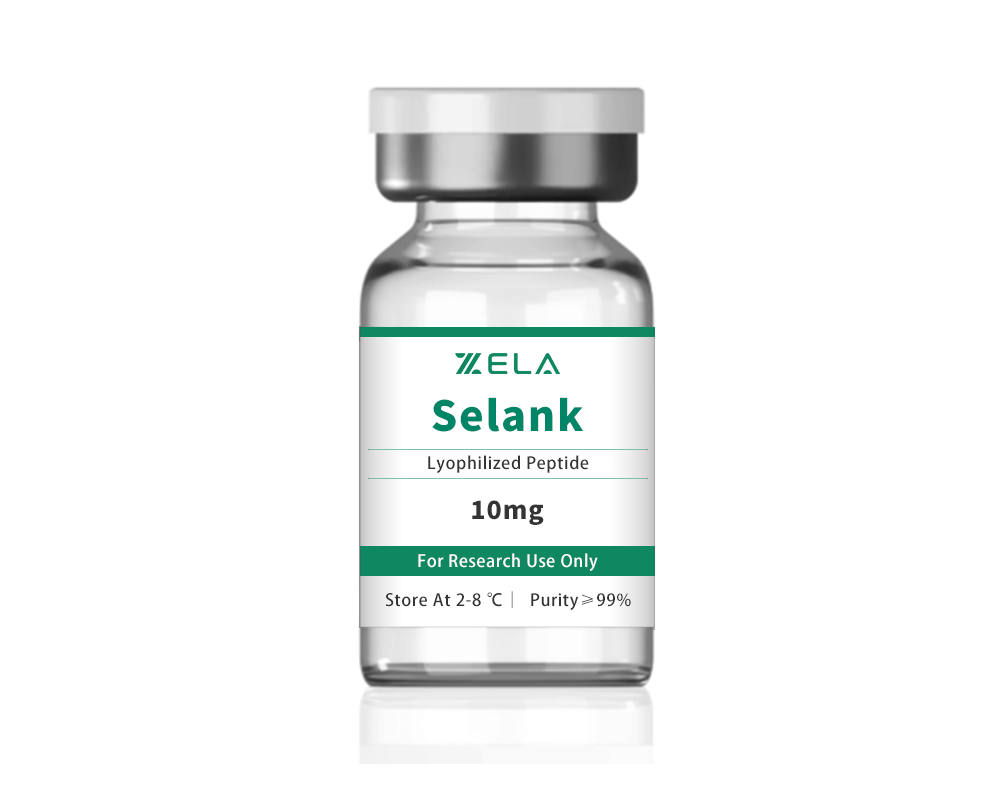
Selank is a synthetic heptapeptide based on the tuftsin sequence. Human studies have examined anxiety-related clinical measures, leu-enkephalin metabolism, EEG response patterns, and functional brain connectivity after Selank exposure[1][2][4]. Intranasal drops or solution are the delivery methods reported in the primary human research summarized on this page.
Human Research Findings and Observations
Selank findings should be read together with the population, amount, formulation, and study design.
- The 2008 comparative study reported similar anxiety-related effects for Selank and medazepam, with additional anti-asthenic and psychostimulant observations in the Selank group[1].
- In the 2012 GAD study, 40% of participants were classified as rapid responders during days 1 to 3, while 60% showed a gradual response pattern through day 14[2].
- The healthy-volunteer neuroimaging study examined functional connectivity after one intranasal Selank exposure rather than a repeated clinical course[4].
- The current manufacturer instruction lists unpleasant taste sensations and possible allergic reactions among reported adverse effects[5].
- Pump output, formulation, nasal condition, and administration technique can affect the delivered amount and deposition pattern[6][7].
Research Controls That Affect Nasal Delivery
Consistent technique improves the value of recorded research observations.
- Pump specification: Record the stated or measured mL per actuation.
- Priming status: Document first use, repriming, and any missed sprays.
- Actuation technique: Keep bottle orientation, stroke length, and stroke force consistent.
- Nasal condition: Record congestion, irritation, or other conditions that could affect deposition.
- Formulation details: Record the vehicle, final volume, concentration, container, and storage conditions.
- Actuation count: Track sprays from priming through final use to identify tail-off and residual volume.

 BRL R$


Reviews
There are no reviews yet.