Description
How Intranasal Semax Research Works
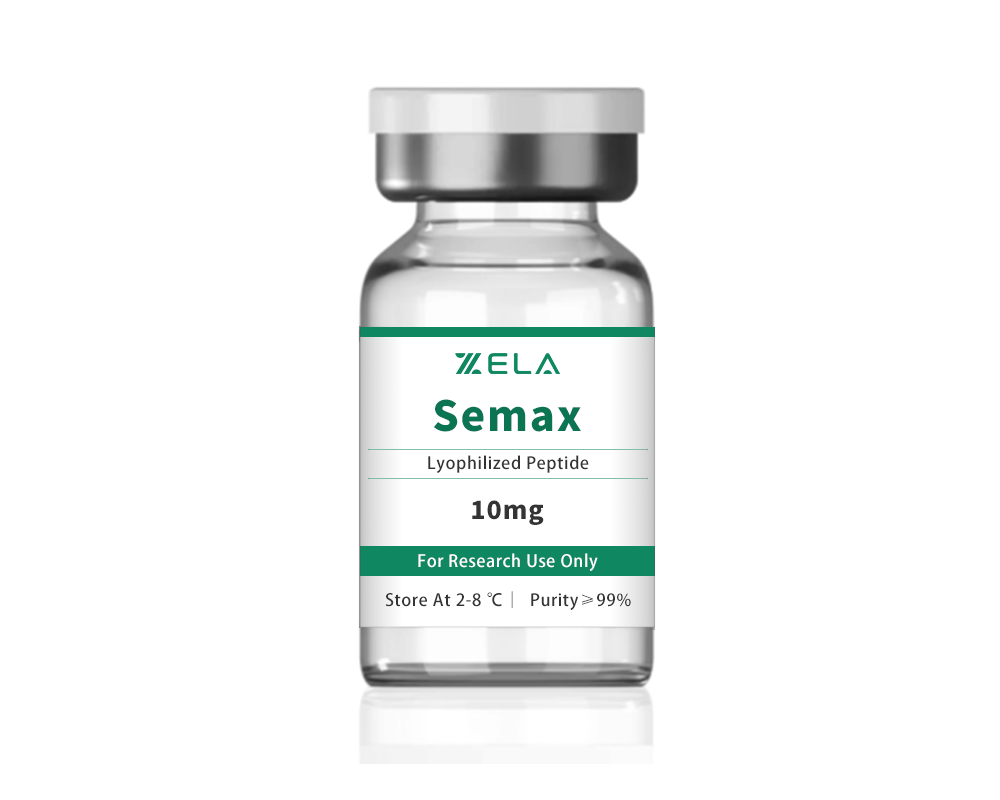
Semax is a synthetic heptapeptide based on the ACTH(4-10) sequence and was developed without the hormonal activity of full-length ACTH. Published research has examined neurotrophic signaling, attention, memory, and condition-specific neurological outcomes[1][3][7]. Intranasal delivery places a measured solution on the nasal mucosa, which is the route used in the human studies summarized on this page.
Human Research Findings and Observations
Semax findings should be read together with the population, amount, formulation, and study design.
- Healthy-volunteer studies reported changes in attention, operator performance, EEG measures, or functional connectivity after intranasal exposure[1][2].
- Condition-specific studies evaluated neurological recovery and other outcomes using protocols that were substantially different from healthy-volunteer experiments[3].
- The official 0.1% drop instructions report possible mild nasal mucosal irritation with prolonged use[4].
- Pump output, formulation, nasal condition, and administration technique can affect the delivered amount and deposition pattern[5][6].
Research Controls That Affect Nasal Delivery
Consistent technique improves the value of recorded research observations.
- Pump specification: Record the stated or measured mL per actuation.
- Priming status: Document first use, repriming, and any missed sprays.
- Actuation technique: Keep bottle orientation, stroke length, and stroke force consistent.
- Nasal condition: Record congestion, irritation, or other conditions that could affect deposition.
- Formulation details: Record the vehicle, final volume, concentration, container, and storage conditions.
- Actuation count: Track sprays from priming through final use to identify tail-off and residual volume.

 BRL R$


Reviews
There are no reviews yet.